Charlotte's Best Bat Removal
We've been voted Charlotte's best bat removal company the past two years!
Get in touch
Bat Experts
Rapid Response
Trained & Educated
Licensed & Certified
About Charlotte Bat Removal
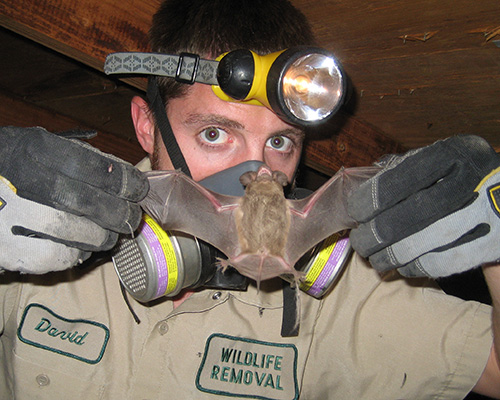
Welcome to charlottebat.com. We are the only qualified bat removal company in Charlotte, North Carolina. There are many signs that could be an indication that you have bats in the attic or loft space of your home, but one of these is the musty odor that can come from the accumulation of guano that they produce. These droppings used to be quite a valuable commodity as they have a high phosphorus content, but in the modern era it isn't just their smell that makes them a problem. Bat droppings are the most common way in which these animals can transmit disease, with the spores of many diseases that may be present in the droppings which can then become airborne when they are disturbed. For this very reason, it is important to make sure you take the right precautions, or hire a reliable animal removal company to carry out the work for you, which is where we can help! All of our agents are equipped with the right breathing mask, goggles and cleaning equipment to be able to remove all of the guano and any soiled materials such as insulation without the risk of transmitting any diseases. We also have the right disinfectant solutions which can be used to sanitize the whole area to ensure that you and anyone else in the property is safe. Of course, we are also experts in getting rid of the bats as well, and our exclusion methods are designed to get rid of all of the bats, without harming any of them. We operate 24-7-365, so don't hesitate to call us at 980-327-1101 to discuss your bat problem and schedule a fast appointment.
Residential
We are experts at removing bats from residential properties. Whether you have a single bat trapped in your house, a colony roosting in your attic, and/or various other problems, there is no need to worry! During our removal process, we make sure to inspect your entire home carefully, tracking down all the entrypoints bats are using to invade your place. Next, we perform a process called live exclusion (where no bats are harmed and all exit your property), then seal all entry holes completely shut. We also take care of the cleanup process after, so your home is safe and clean!
Learn MoreCommercial
Besides residential areas, we also have a wealth of experience removing bats from commercial properties! We begin by investigating the area for possible bat entrances, covering holes even as small as 1/4 of an inch. Through our live exclusion process, bats leave the building through one-way exits, and we seal up every hole afterward. Once the bats have been removed, we perform a cleanup process. This includes dealing with guano, replacing damaged insulation, and decontaminating the place.
Learn More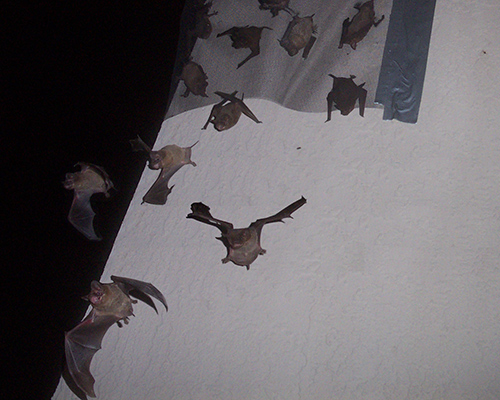
Contact us for bat removal today!
What Our Customers Say
I had a bat flying around in my house at 9pm, and CITY bat removal came right out and caught it in a net.
Sarah Lakewood
I had an annoying colony of bats stuck in my attic for a while before I finally decided to call for help. They were able to quickly and thoroughly solve the problem!
Brandon Chung
They did a great job clearing my attic of bats and didn't hurt any of the creatures.
Charlotte Demers
The technicians at CITY Bat Removal are skilled, professional, and know exactly what they're doing. Would highly recommend.
Mark O'Connor
My house stank of bats and their guano inside my wall. CITY Bat Removal not only removed the bats, they also got rid of the smell!
Alexis Ramirez
.jpg)
Do Bats Avoid Light?
Bats embody the phrase ‘a rat with wings' because of how they look. With a fuzzy body and thin membranes on their forelimbs, they look grotesque to us. These are the only nocturnal flying mammals on Earth. Only being seen at night adds to the superstitions and rumors. There are several factors that bats are helpful to the ecosystem and keep insect populations at bay. Some even help pollinate flowers in various areas as well.
Nocturnal Flying Mammals
When we say nocturnal, we mean these guys are awake at night and sleep during the day. With all of their daily activities happening after dusk, they have developed low-light vision. Paired with echolocation, bats hunt at night when insect pests are active. Their coloring gives them better camouflage at night too. Flying during the daytime makes them vulnerable to predators. Their survival depends on how fast they can fly, how well they can escape, and how easy it is for them to hide. Daylight is just the wrong time of day for bats.
Differences of Species
Not all species are limited to only nighttime hunting, though. Several frugivores, bats that eat fruit or drink nectar, can see a bit more color than their insect-eating buddies, including ultraviolet light. Their eyes use more cones than rods to see better in daylight. Cones are what we use to see color in daylight while rods are dedicated to night vision. This means they can better handle being a bit more active during the day than others. Nature is a funny thing in how the development of the various species came about. Bats have such a wide array of habits that it can be hard to understand how differently they can act.
As a guideline, most bats that we see in our neighborhoods will avoid bright light entirely. They will go out of their way to avoid dull light. They will even change their regular flight path if, say, streetlights were installed. Bats prefer little to no light unless it is moonlight.
Can You Light a Roost?
Having a quiet roost encourages better sleep and fewer potential disturbances. Bats are stubborn in keeping a good roost. Lighting up a roost will only cause discomfort and they will move into a slightly different spot instead of leaving outright.
Some of the problems with lighting a roost can severely affect the survival of the bats. The lights can delay or prevent them from leaving at all. If this happens, bats can miss the chance to catch insects and have less time to find food. They might abandon the roost entirely. If it is a maternity colony, baby bats called pups will starve and die. If they are in the roost, they could feel trapped and unable to get out. Either result has potential legal action against you.
For some species that are extra vulnerable in light, their feeding behavior changes. They lose foraging grounds to light. That light attracts their prey, but they are unable to get it for fear of becoming prey themselves.
Options for You
Instead of lighting up the roosting area with expensive supplies, especially since it might not even work, you should consult a professional. They can give you tips and advice as well as a quote for coming out to remove or exclude bats from your home or property. In any case, it is better to give bats a place that is safer for them and you that is not your home. Having a bat colony in the area will help control insect pest populations as well.
Consult a Professional
Handling bats is discouraged. They are timid creatures and humans can be much scarier than the rumors around bats. If one is on the ground, they might be eating and should be left alone. If they appear sick, it is especially important not to get too close to it. If you come across one during the day, that is even more reason to avoid them. Daytime flying is reserved for emergencies for bats. It could be sick or disoriented and will pose a danger to others. Bats will try to avoid light, even missing meals when healthy. For any bat that is concerning you, call a local professional to deal with it. There are ways you can help, but touching and handling a bat is not encouraged.